Home / Gut & Skin / Guides
Diet and acne: what dermatology actually knows
Skin care marketing loves to sell you a "gut reset" for your face. Dermatology has a calmer answer: two diet factors have real research behind them, and everything else is still an open question.
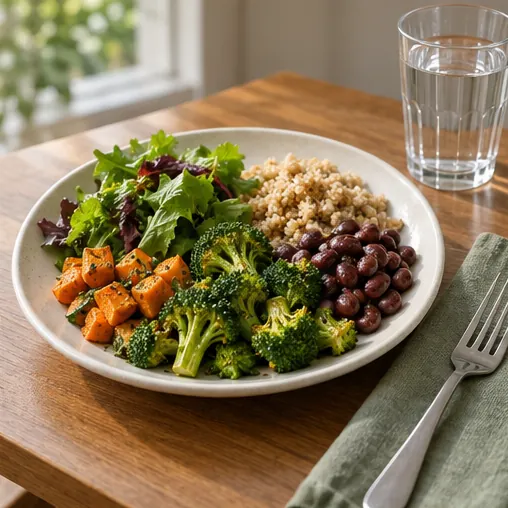
What has real research: low glycemic eating
According to the American Academy of Dermatology's evidence review, small studies from the US, Australia, Korea and Turkey found that people with acne who switched to a low glycemic diet had significantly fewer breakouts. The suspected mechanism is plain: high glycemic foods spike blood sugar, and those spikes drive inflammation and sebum production, both of which feed acne. Low glycemic swaps are ordinary food: most fresh vegetables, beans, steel cut oats.
What has real research: cow's milk
Several large observational studies, covering tens of thousands of women, girls and boys, found a link between cow's milk and acne. In one, women who drank two or more glasses of skim milk a day were 44% more likely to have acne. Oddly, cheese and yogurt did not show the same link in these studies, and the AAD is honest that the research here is association, not proof of cause.
What the AAD says about the rest
Chocolate, greasy food, "toxins": the AAD's position is that more research is needed. Some studies find a connection, others find none. Anyone selling you a certainty here is selling, not informing.
What is worth trying
If acne bothers you, a four week experiment is cheap and low risk: shift toward low glycemic staples and cut milk, keep everything else the same, and watch your skin. Keep taking photos weekly so you judge the change, not your mood. And if acne is persistent or scarring, see a dermatologist. That visit beats any product on this site.
Sources
- American Academy of Dermatology: Can the right diet get rid of acne? (study summaries on low glycemic diets and cow's milk, checked November 16, 2026)
Keep reading
Back to the Gut & Skin hub · Before you buy a probiotic · How we review products